

Residential Proxies vs. Datacenter IPs: What’s the Difference?
Choosing the right IP infrastructure can make a significant difference to website traffic generation, performance testing, market research, and digital marketing campaigns. Two of the most commonly discussed options are residential proxies and datacenter IPs. But what separates them, and which is better for your traffic generation strategy?
Understanding the differences can help marketers, SEO professionals, and website owners make smarter decisions about speed, reliability, geographic targeting, and costs.
In this definitive guide, we’ll explore how residential proxies and datacenter IPs work, their advantages and disadvantages, and how to choose the right option for your objectives.
What Are Residential Proxies?
Residential proxies use IP addresses assigned by Internet Service Providers (ISPs) to residential internet connections. Instead of routing requests through a commercial server, these proxies use IP addresses associated with real household internet connections.
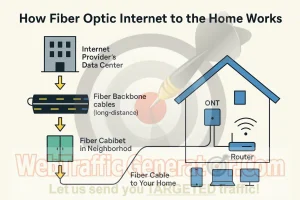
This makes residential proxies particularly useful for activities where geographic accuracy and realistic network characteristics are important.
Key advantages of residential proxies include:
- Authentic IP origins: They use addresses associated with residential internet providers.
- Geographic targeting: Many providers offer country, regional, and sometimes city-level targeting.
- IP diversity: Large residential networks can provide access to extensive pools of different IP addresses.
- Flexible rotation: Depending on the provider, IPs can rotate automatically or remain consistent during a session.
Residential proxies are commonly used for local SEO research, advertising verification, market research, and collecting publicly available location-specific information.
However, they generally cost more than datacenter proxies and can have variable connection speeds.
What Are Datacenter IPs?
Datacenter IPs originate from commercial servers hosted in data centres or cloud infrastructure. Unlike residential IPs, they are not associated with ordinary household internet connections.
They are designed to provide fast, reliable, and scalable connectivity, making them attractive for businesses handling large volumes of web requests.

Key advantages of datacenter IPs include:
- High connection speeds: Server infrastructure typically provides fast and consistent connectivity.
- Affordable pricing: Datacenter IPs are generally cheaper than residential alternatives.
- Reliable performance: Professional hosting infrastructure offers predictable uptime.
- Scalability: Businesses can often expand their IP capacity relatively easily.
Datacenter IPs are particularly suitable for website performance testing, internal website monitoring, authorised data collection, and high-volume operations involving websites that permit automated requests.
Their main disadvantage is that some websites identify datacenter IP ranges more easily and may apply additional security checks.
Residential Proxies vs. Datacenter IPs: Key Differences
Although both options route internet traffic through alternative IP addresses, their technical characteristics and ideal applications differ.
| Feature | Residential Proxies | Datacenter IPs |
|---|---|---|
| IP source | Residential ISPs | Commercial servers |
| Connection speed | Variable | Generally faster |
| Cost | Higher | Lower |
| Geographic targeting | Often extensive | Provider dependent |
| IP diversity | Typically extensive | Provider dependent |
| Stability | Can fluctuate | Generally consistent |
| Detection profile | Residential network origin | Hosting infrastructure |
| Best suited for | Local research and verification | Performance and scalable operations |
The most important distinction is the origin of the IP address. Residential proxies represent consumer ISP connections, while datacenter IPs originate from commercial hosting infrastructure.
Neither option is universally better. Your requirements should determine your choice.
Which Proxy Type Is Better for Traffic Generation?
The answer depends on what you mean by traffic generation.
If your objective is to test website capacity, monitor server performance, or generate authorised requests for quality assurance, datacenter IPs can offer an economical and efficient solution.
For geographic research, regional advertising verification, and understanding how websites appear to visitors in different locations, residential proxies may be more appropriate.
However, an important distinction must be made: using residential proxies does not automatically make automated visits genuine human traffic.
Search engines and analytics platforms evaluate many signals beyond IP addresses. Artificial visits should never be confused with genuine visitors, and proxy-based activity does not guarantee better rankings, conversions, or organic visibility.
For sustainable website growth, focus on attracting relevant visitors through quality content, search engine optimisation, and legitimate marketing campaigns.
Can You Combine Residential and Datacenter IPs?
Absolutely. A hybrid approach can be useful for businesses with different technical requirements.
For example, a digital marketing agency might use datacenter infrastructure for routine website monitoring while using residential connections to verify location-specific advertising placements.
This approach allows businesses to match infrastructure to individual tasks instead of paying for premium residential connections when they are unnecessary.
The key is to establish clear usage policies, respect website terms and applicable privacy regulations, and monitor performance regularly.
How to Choose the Right Option
Before investing in proxy infrastructure, consider these five factors:
- Your objective: Determine whether you need performance testing, geographic research, or another legitimate application.
- Budget: Compare monthly costs, bandwidth allowances, and additional service fees.
- Connection speed: Consider latency, uptime, and consistency.
- Geographic coverage: Check whether your required countries or regions are supported.
- Provider reliability: Look for transparent IP sourcing, customer support, security standards, and clear usage policies.
Making the right choice from the beginning can help reduce unnecessary expenses and improve operational efficiency.
Frequently Asked Questions
Are residential proxies better than datacenter IPs?
Residential proxies are generally better for geographic accuracy and applications requiring residential ISP connections. Datacenter IPs are usually better for speed, predictable performance, and affordability.
Are datacenter IPs faster than residential proxies?
Generally, yes. Datacenter IPs use commercial server infrastructure, whereas residential connections depend on individual household internet connections and can experience variable speeds.
Do residential proxies improve SEO rankings?
No. Residential proxies do not directly improve search engine rankings. They can support legitimate SEO research, such as local search result monitoring, but rankings depend on many factors, including content quality, relevance, and technical SEO.
Can I use proxies for website traffic testing?
Yes. Proxies can support authorised website testing and geographically distributed quality assurance. However, simulated visits should not be treated as genuine engagement or used to manipulate analytics or search rankings.
Final Thoughts
Choosing between residential proxies and datacenter IPs comes down to understanding your objectives. Residential proxies offer geographic flexibility and authentic residential network origins, while datacenter IPs provide speed, affordability, and scalable infrastructure.
For digital marketers and website owners, the best strategy is to invest in tools that support genuine website growth, reliable performance, and meaningful audience engagement.
At WebTraffic-Generator.com, explore digital marketing and website traffic solutions designed to help businesses expand their online presence and reach their marketing objectives.


